
Brainfully vs Claude
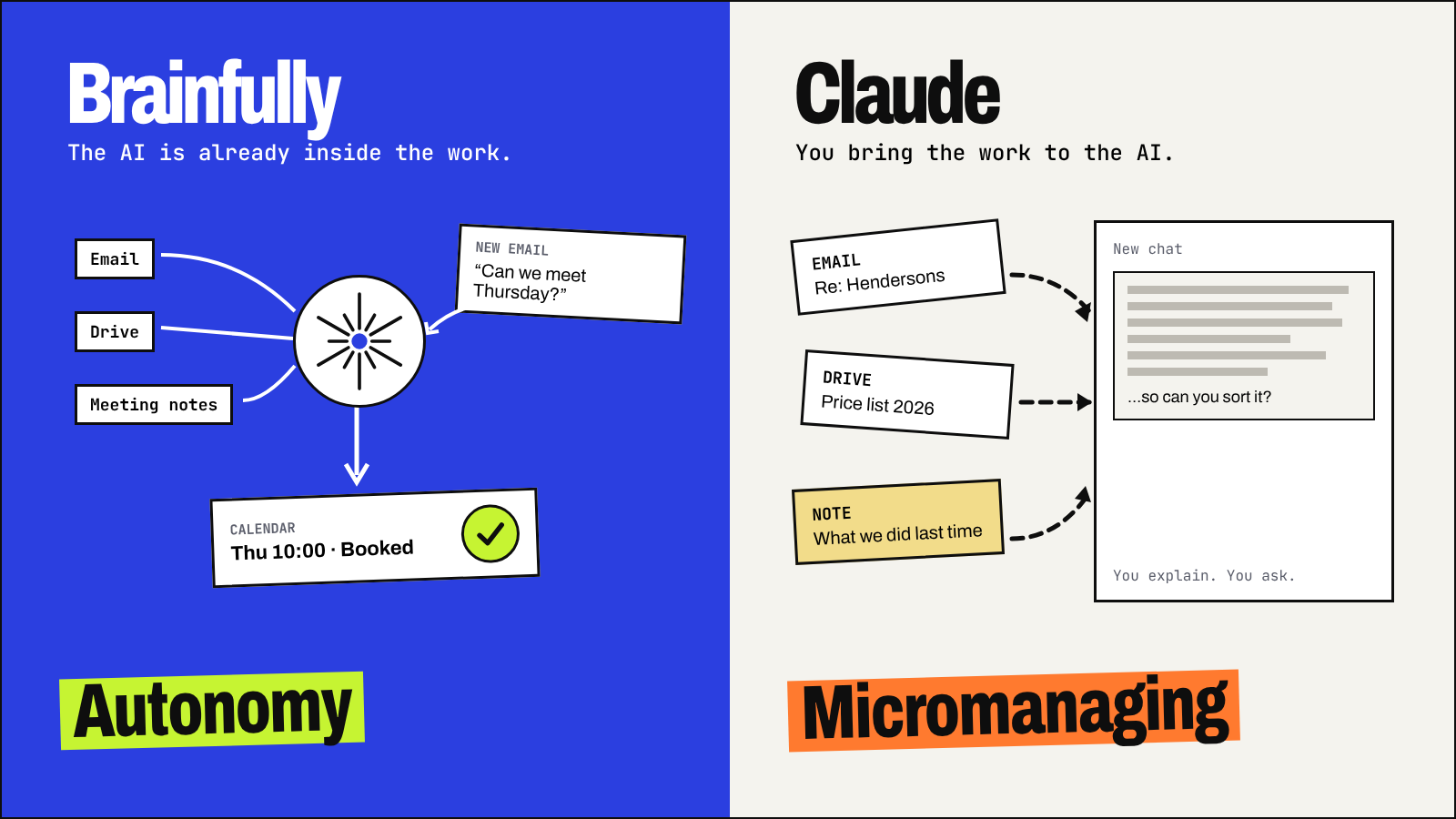
Thursday, 3pm. You're out on a job. A client emails: "Can we meet next week?"
You see it at 9pm, along with a team question you've answered before and an invoice nobody chased.
Claude could have written the perfect reply in seconds. But it was waiting for you to ask.
There are two kinds of AI tool: ones you ask, and ones that work in the background. Most small businesses only have the first.
1. Claude: you're in charge
Claude is an AI assistant that can help you write proposals and emails, design slides and posters, make sense of messy spreadsheets and think a problem through.
Plug it into Gmail, Google Drive or Microsoft 365 and it can search your files. You tell it how you like things done a couple of times, and it does them your way.
You're in charge: you spot the work, give it the details and ask. That's what makes it so good for work you want to shape yourself.
You can also set scheduled tasks in Claude to run on a timer, but you still have to set each one up.
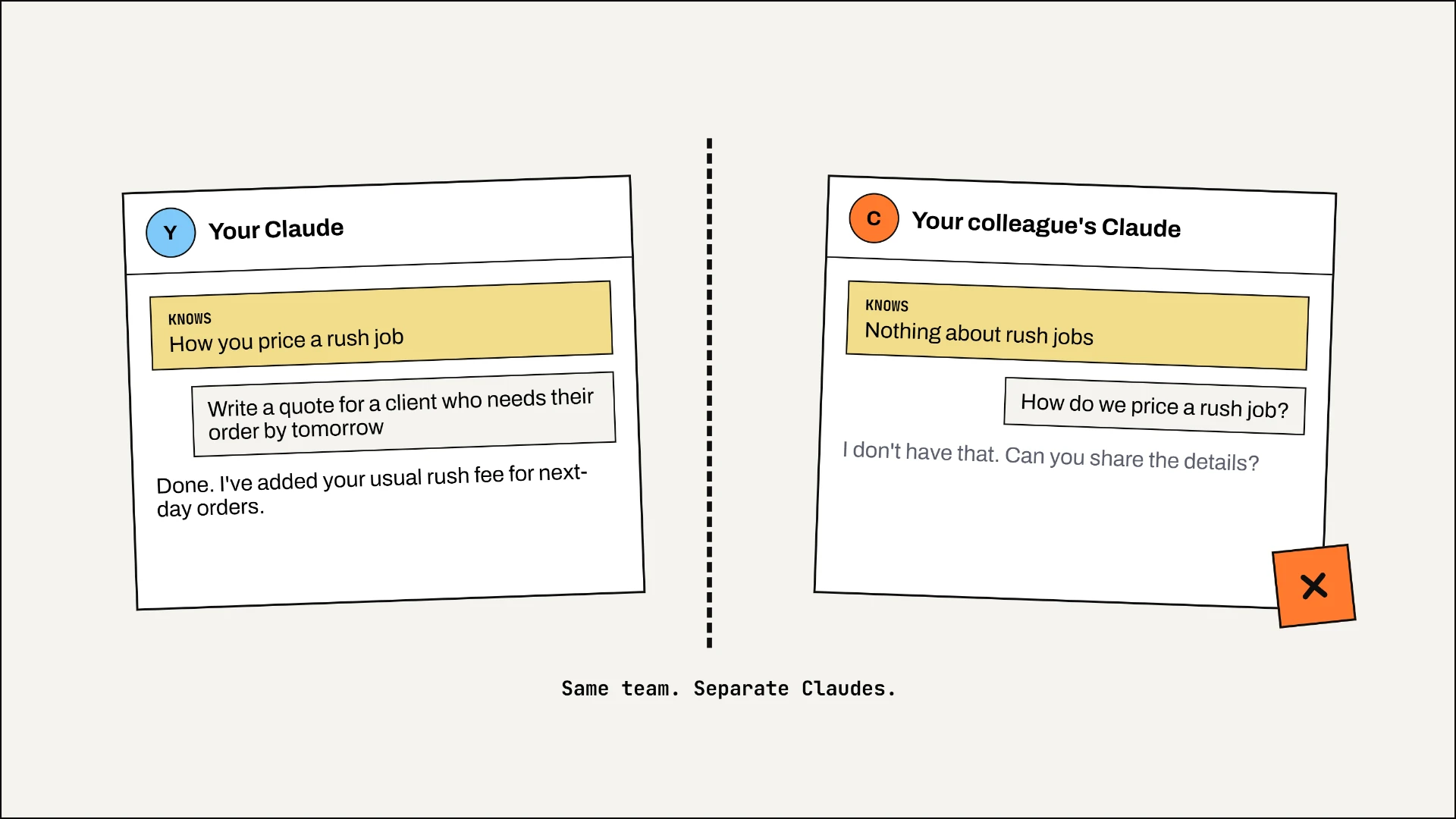
On a Claude Team plan, everyone gets their own Claude and can share projects. But each person's Claude learns separately, so what yours knows, your colleague's doesn't.
2. Brainfully: built to run on its own (with Claude or another model)
For any AI to work on its own, it needs two things: to see the work as it arrives, and to know how you like it done.
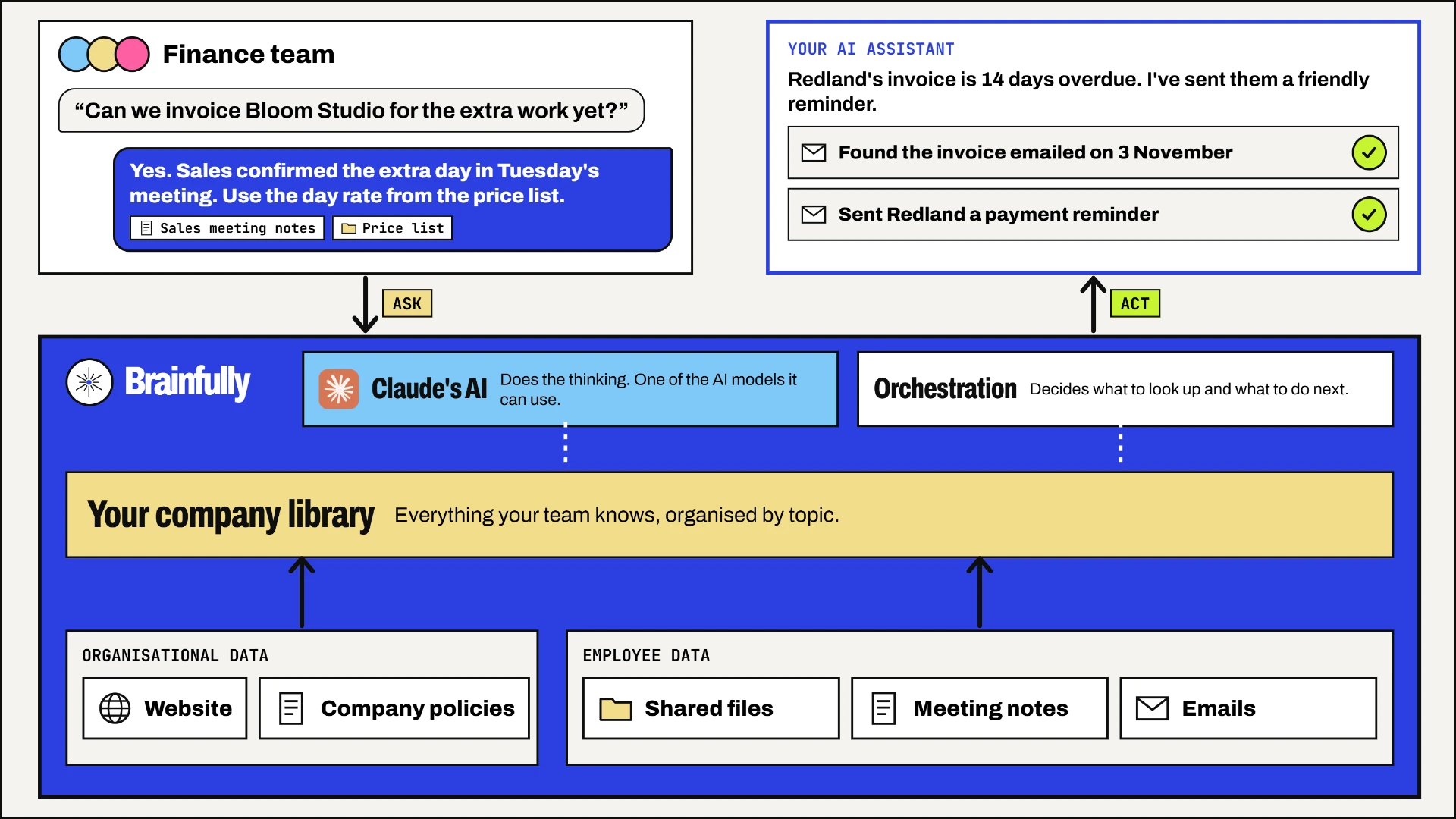
Brainfully has both. It reads your emails, files and meeting notes as they come in, and keeps a handbook of how your business runs: how you do things, your clients, what was agreed.
Here's that same Thursday with Brainfully. While you were on the job:
- The client's email came in, and the meeting got booked.
- Someone on your team asked on WhatsApp how to price a rush job, and got an answer based on how you have priced your rush jobs before.
- The overdue invoice got a polite nudge.
However, Brainfully needs a smart AI to do its thinking, and Claude is one of the models it can use. Think of Claude's AI like electricity. The Claude app and Brainfully are two different appliances plugged into it: same power, different jobs.
The diagram below shows how it works across a team. Brainfully learns from your emails, files and meeting notes, plus things like your website and company policies, and turns it all into one company library. Claude’s AI is one piece of the bigger picture: it does the thinking, so your team can ask it anything, and Brainfully can get on with work without being asked.
3. It isn't really a fight
Both tools are good at what they were made for. Claude is great when you bring it a specific piece of work to do. Brainfully keeps the everyday work moving.
The real difference is where the know-how comes from.
In most small businesses, it comes from the top: the owner knows how things are done, and everyone asks them. When you give your team their own Claude, the know-how ends up split between people.
Brainfully works from the bottom up. It learns from the work your whole team is already doing, in emails, files and meetings, and shares it with everyone.
Claude is for when you need to bring the work. Brainfully is for the work that shouldn't need you to bring it.