
Your team is faster with AI. Is your business?
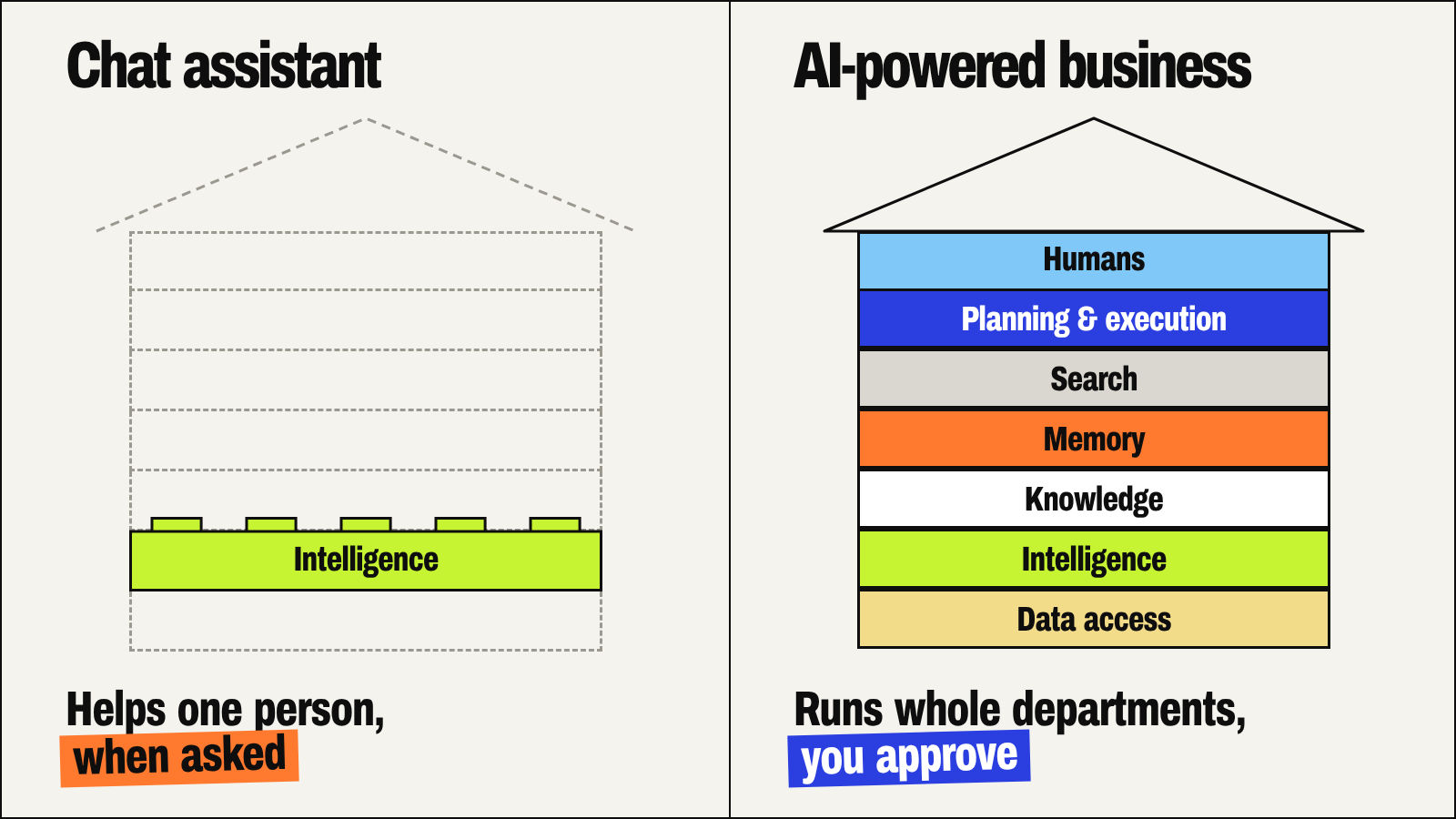
Your team probably already uses Copilot, ChatGPT or Claude: drafting emails, creating slides, summarising documents. Making each person more productive.
We think that's a really good starting point. But from a business productivity point of view, we need to start thinking beyond the individual to-do list.
To become an AI-powered business, we need to evolve from a chat assistant to something more transformative for a business: AI that runs the work for the whole team, with people approving what matters. But not every kind of AI can do that.
1. Four kinds of AI in a business
Let’s start with an overview of how businesses are using AI today.
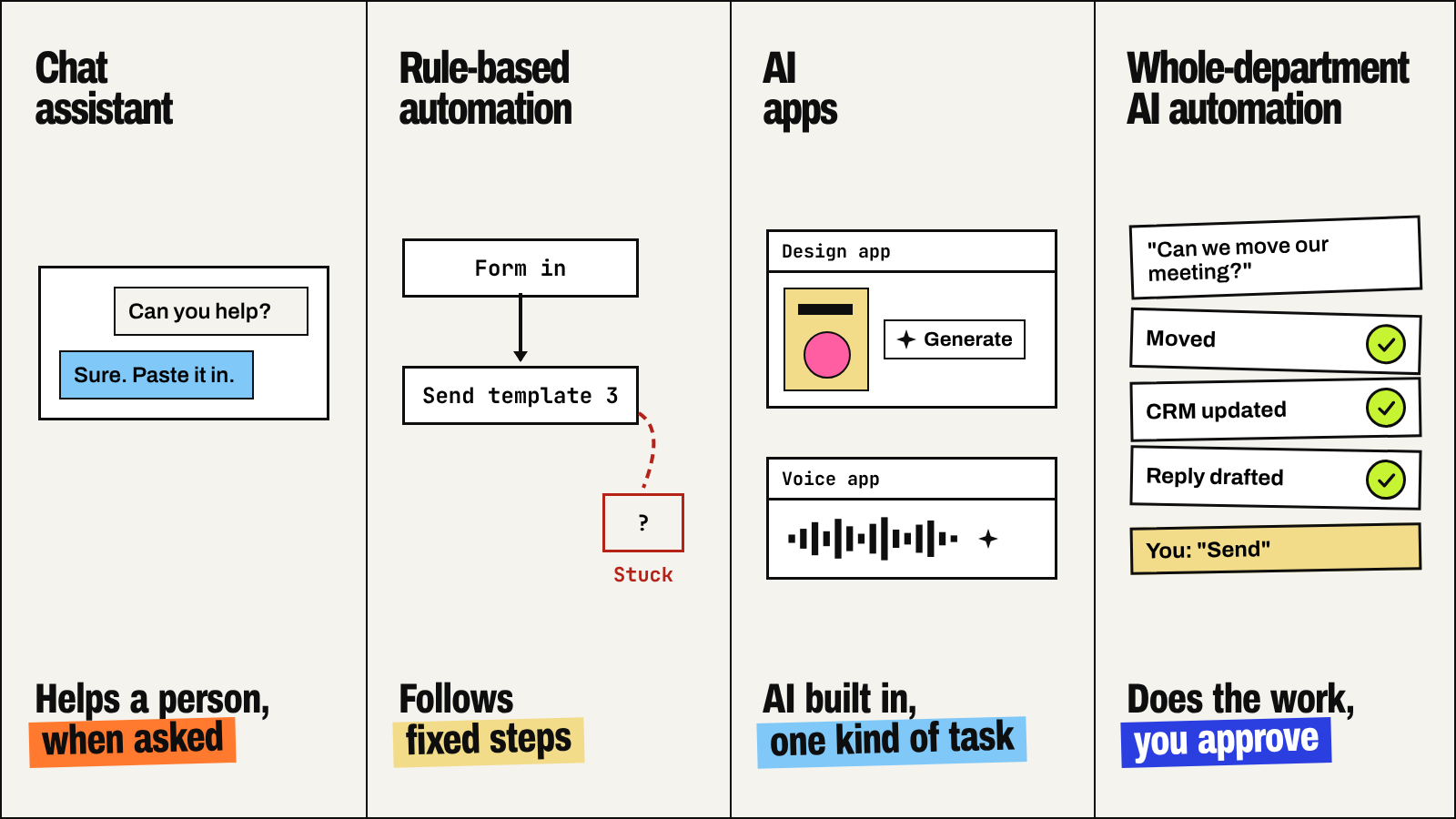
Chat assistants, like ChatGPT or Claude, help one person with a task when they ask.
Rule-based automation follows fixed steps: if a form comes in, send template 3. It stops when something doesn't fit.
AI apps, like Canva or ElevenLabs, have AI built in for one kind of task, like creating designs or voiceovers.
Whole-department AI automation understands the work and gets on with it. A client emails to move a meeting: it moves it, updates the CRM and drafts the reply for you to approve.
The first three help people with tasks. The fourth transforms how the department runs.
2. The seven bricks of an AI-powered business
A chat assistant is just one brick: the intelligence. Here's the full stack, from the ground up.
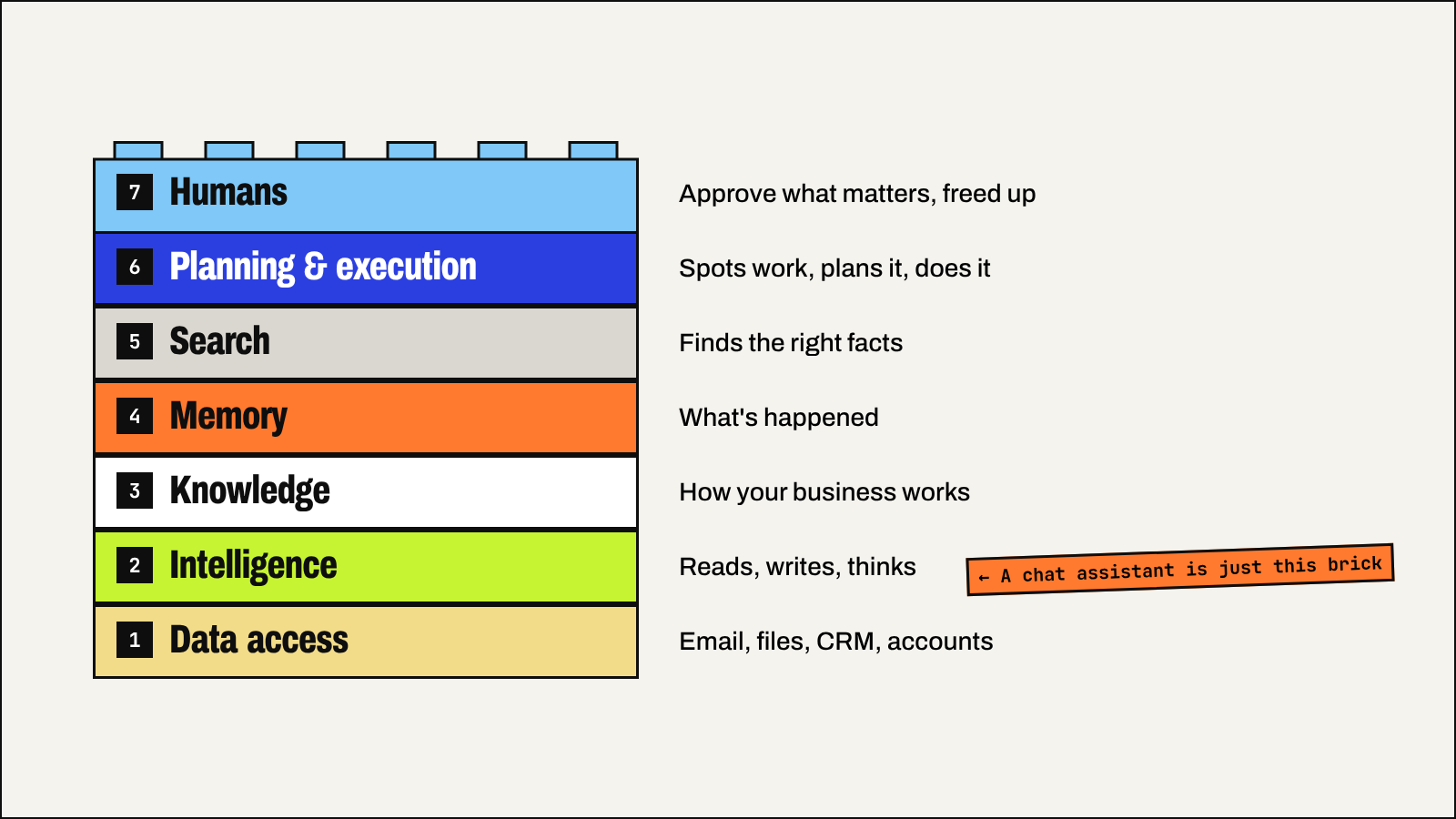
1. Data access. The systems your business runs on: email, files, calendar, CRM, accounts. Each person only gets what they're allowed to see.
2. Intelligence. The AI that reads, writes and thinks on top of your data, like Copilot, ChatGPT or Claude. On its own, it waits to be asked.
3. Knowledge. The AI reads all of that and writes down how your business works: your services, prices, processes and rules.
4. Memory. What's happened: past conversations, decisions, each client's history. So it never starts from scratch.
5. Search. For every task, it finds the right facts in your knowledge and memory, so it answers from your business, not a guess.
6. Planning & execution. It notices when work comes in, like a new email, plans the steps and does them: updating the CRM, booking a slot, looking something up online.
7. Humans. Your team approves what matters before it goes out, and gets time back for the work only people can do.
3. Your team needs to evolve too
Today, most of your team's day goes on doing the tasks themselves.
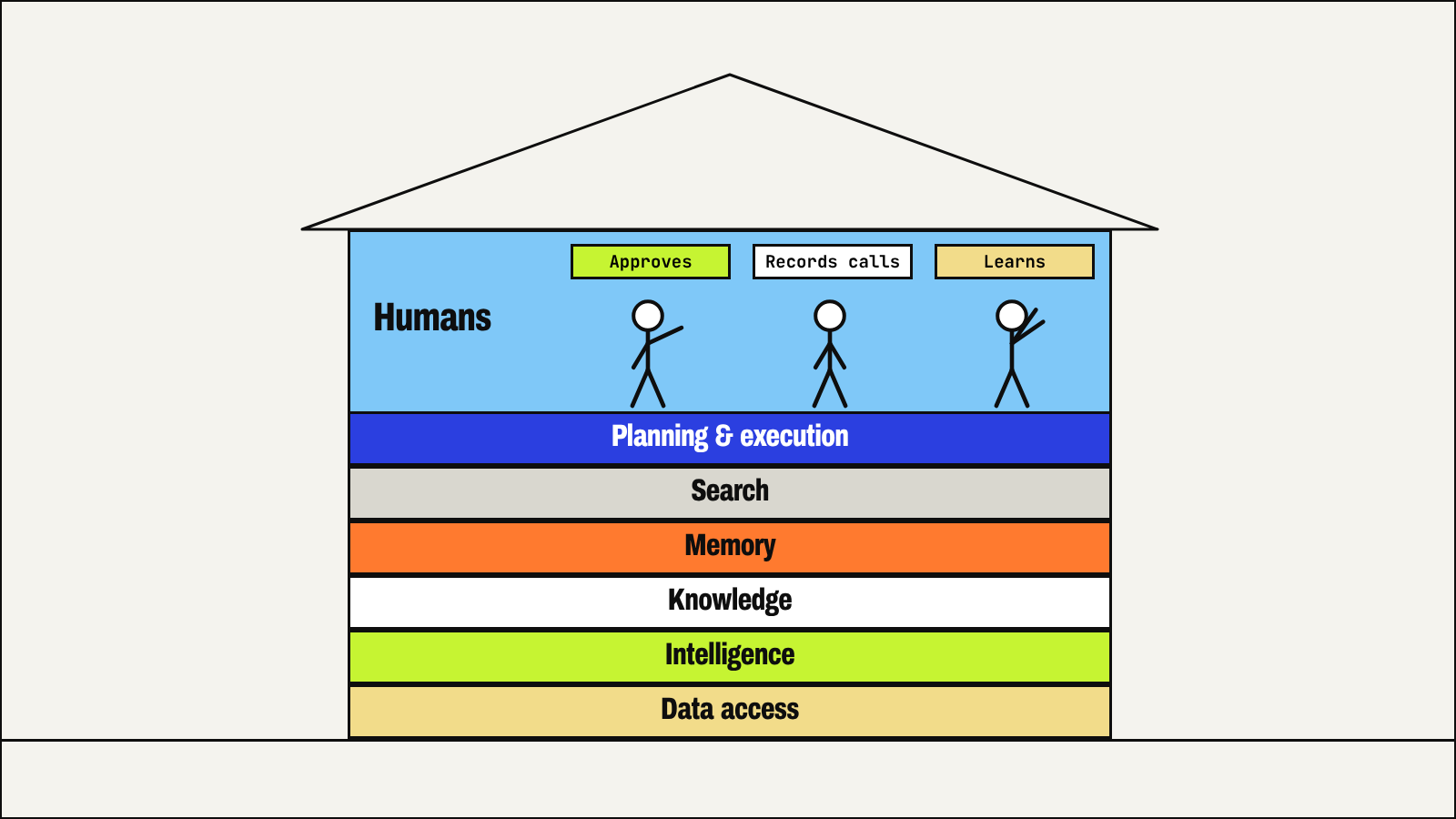
In an AI-powered business, that changes: the AI does the work, and your people review and approve it. We believe that's where the real value is, because it frees your team up for clients, ideas and decisions.
Getting to that point takes change management.
Your team needs new habits so the AI can see and do its best work. For example, if your team doesn't record client calls today, they'll need to start using an AI notetaker.
It also takes training, so everyone knows how to work alongside the AI: what to hand over, how to check its work and when to step in.
At brainfully, we’re on this mission to enable businesses to become profitable AI-powered businesses.